
The Covered Call Strategy: Generating Monthly Cash Flow from Dividend & Growth Stocks
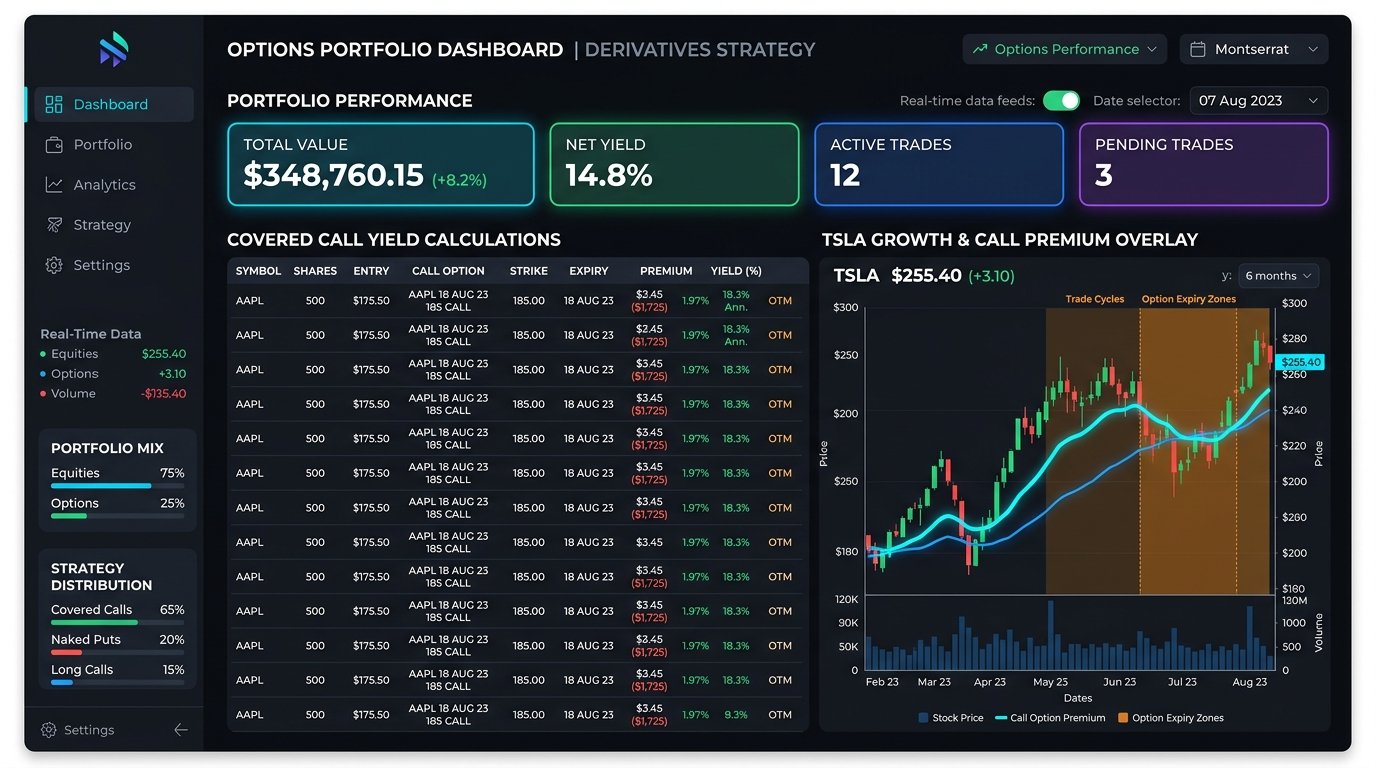
Table of Contents
For long-term stock investors, holding shares through sideways or choppy market regimes can result in months of stagnant portfolio returns. The Covered Call strategy allows investors to monetize their existing stock holdings by selling short Call options against shares they already own.
By collecting monthly option premiums (), investors create a recurring yield stream while providing downside buffer against minor market pullbacks.
Strategic Comparison: Covered Calls vs. Naked Stock Holding
| Feature / Metric | Unhedged Stock Position | Covered Call Position | ATM Covered Call (Aggressive) |
|---|---|---|---|
| Primary Goal | Capital Appreciation | Income Generation + Moderate Growth | Maximum Immediate Cash Flow |
| Downside Protection | None (100% stock risk) | Partial (Buffered by premium collected) | Highest Buffer (Larger premium) |
| Upside Cap | Unlimited | Capped at (Short Call Strike + Premium) | Capped near current price |
| Ideal Market Condition | Strong Bull Market | Neutral to Moderately Bullish Market | Flat or Rangebound Market |
| Typical Monthly Yield | 0% (Except quarterly dividends) | 1.5% to 3.0% per month | 3.5% to 5.0% per month |
Calculating Covered Call Return on Capital
To measure the efficiency of your covered call trade setup, use the Net Premium Yield formula:
Step-by-Step Execution Guidelines
1. Select High-Quality Stocks with Liquid Options
Only write covered calls on fundamentally strong companies you are comfortable holding long-term (e.g. RELIANCE, TCS, ICICIBANK, INFOSYS). Avoid penny stocks with illiquid option chains.
2. Choose the 20 to 30 Delta Strike Price
- 20 Delta Strike: Provides ~80% probability of retaining the stock while generating a 1.5% - 2% monthly yield.
- 30 Delta Strike: Generates higher premium (~2.5% - 3%) with slightly higher probability of stock assignment.
3. Target 30 to 45 Days to Expiration (DTE)
Option time decay () accelerates rapidly inside the 45-day window. Selling monthly contracts captures peak decay efficiency.
Integration with “The Wheel Strategy”
Covered Calls are the second phase of the famous Wheel Strategy:
- Phase 1: Sell Cash-Secured Puts on a high-quality stock you want to buy at a discount.
- Phase 2: If assigned the stock, hold the shares and immediately begin selling Covered Calls.
- Phase 3: If your Covered Call gets assigned, sell your shares at profit and return to Phase 1!
Related Journal Articles

Short Strangles vs. Iron Condors: Strategic Options Income for Volatile Markets
Compare defined-risk Iron Condors with undefined-risk Short Strangles. Learn how Delta selection, margin management, IV rank, and defensive adjustments dictate options income strategies in Indian markets.

Overcoming Loss Aversion & Revenge Trading: The Neuroscience of Discipline
Why losses hurt twice as much as gains feel good. Master psychological circuit breakers, risk-per-trade caps, and neuroscience routines to eliminate revenge trading.